Main content
Course: Biology library > Unit 33
Lesson 1: Circulatory and pulmonary systemsCirculatory system and the heart

Introduction to the circulatory system and the heart. Created by Sal Khan.
Want to join the conversation?
 What makes people believe de-oxygenate blood is "blue"? Even Sal mentioned this in one of his videos. I've read many biology and medical books and I've never come across evidence of cells actually turning blue. Veins have a bluish color, but is this factually because of the color of blood? Extracting blood from the vein in a vacuum should still show blood as red, just not as bright red as when the hemoglobin is oxygen saturated. Please clarify.(70 votes)
 Neither veins nor blood are blue. Veins near the surface of the skin appear blue at times due to scattering of the light.(42 votes)
 Why do arteries pulsate and veins don't ?(20 votes)
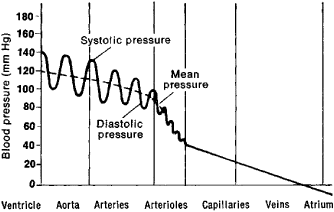
 When blood leaves the heart, it goes into the arteries. As a result, the blood pressure is much higher in the arteries compared to the veins, as the arteries are much closer to the source of pressure (the heart). You can feel the pulsation because of the heart's beating. When the heart is contracted (systole), blood pressure in the arteries go up, and when the heart is relaxed (diastole), blood pressure in the arteries go slightly down again. You can see the pulsating in this graph of blood pressure.
http://img.tfd.com/ggse/77/gsed_0001_0013_0_img3026.png
Note how the up-and-down oscillations stop once the blood reaches the veins.(41 votes)
- my teacher told me blood is not blue its some red/purply color is she right???(13 votes)
 Well, in humans, blood is red when oxygenated (carrying oxygen), and is more of a reddish-purple colour when deoxygenated (not carrying oxygen, likely to be carrying carbon dioxide.) You never see deoxygenated blood, since it makes contact with oxygen in the air. You may see it in veins, but that's about it. Other species may have different colour blood. For example, tarantulas have blue blood, and moths have clear blood. I don't know why this is though, so you'll have to find that out for yourself. Hope this helps!(31 votes)
 I am seriously confused between pulmonary arteries and veins. Why don't you just call pulmonary arteries veins since they don't have oxygen like the other veins?(12 votes)
 look ,an artery is defined as a blood vessel which carry blood away from the heart & since the pulmonary arteries carry blood away from the heart they are arteries & it really doesn't matter whether it is carrying oxygenated or deoxygenated blood. Similarly a vein is defined as a blood vessel which carry blood to the heart & the pulmonary vein carries blood to the heart so it is a vein.(10 votes)
 Are you able to grow new blood vessels if they are damaged?(8 votes)
 Yes, its called angiogenesis. For instance in the heart if there are small blockages new vessels may form around them. In other cases such as a tumor the tumor promotes angiogenesis to supply itself with nutrients. But there are limits to the process, large vessels like the aorta are not going to heal by this method.(14 votes)
 are capillaries present every where in the body?(5 votes)
- I can think of a few exceptions at the moment.
Some types of cartilage don't have a blood supply (and thus no capillaries).
The aqueous humor (goop inside an eyeball) is also clearly (heh) devoid of capillaries.
There is at least one other obvious (but perhaps hard to think of) tissue within your body that has no capillaries.
Can you think of what that might be?
Hint it has no lack of blood ... 😊(11 votes)
 veins are made up of living cells . how they get oxygen ?(5 votes)
 One of 2 ways. most of the veins / venules are just supplied by the blood that flows through them. The blood in the veins is called "Deoxygenated", but it still has most of its original oxygen left in it.
OR, for the really big veins in the body, they actually have their own little blood supply flowing through their wall. So there are tiny vessels (called vasa vasorum) that bring blood and oxygen to the different layers of the vein(11 votes)
 why do red blood cells have little indents? isn't that just less space for the stuff that sucks up oxygen?(3 votes)
- The shape of an RBC allows it to bend and squeeze through tiny capillaries which have less diameter than the cell itself.(10 votes)
 Unless you donate blood, do you always have the same amount of blood?(7 votes)
 Well, when you donate blood, it takes your body 4 to 8 weeks to replace the red blood cells in your body that you donated. As for you having the same amount of blood all the time, when you are an infant to 4 years of age, you actually have less blood in your body than of an adult. When you turn 5 years of age, then you have the same amount of blood as an adult, which is about 1.6 gallons. But, I would bet that new red blood cells are born and old ones die within your lifetime, to keep it balanced.(3 votes)
- what happened if the blood stop running?(5 votes)
 Blood flow that stops for long enough can damage or kill brain cells. This can cause a stroke or death(6 votes)

Video transcript
Where I left off in the last
video, we talked about how the hemoglobin in red blood cells
is what sops up all of the oxygen so that it increases the
diffusion gradient-- or it increases the incentive, we
could say, for the oxygen to go across the membrane. We know that the oxygen
molecules don't know that there's less oxygen here, but
if you watch the video on diffusion you know how
that process happens. If there's less concentration
here than there, the oxygen will diffuse across the membrane
and there's less inside the plasma because the
hemoglobin is sucking it all up like a sponge. Now, one interesting question
is, why does the hemoglobin even have to reside within
the red blood cells? Why aren't hemoglobin proteins
just freely floating in the blood plasma? That seems more efficient. You don't have to have things
crossing through, in and out of, these red blood
cell membranes. You wouldn't have to make
red blood cells. What's the use of having these
containers of hemoglobin? It's actually a very
interesting idea. If you had all of the hemoglobin
sitting in your blood plasma, it would
actually hurt the flow of the blood. The blood would become more
viscous or more thick. I don't want to say like syrup,
but it would become thicker than blood is right
now-- and by packaging the hemoglobin inside these
containers, inside the red blood cells, what it allows
the blood to do is flow a lot better. Imagine if you wanted to
put syrup in water. If you just put syrup
straight into water, what's going to happen? The water's going to become a
little syrupy, a little bit more viscous and not
flow as well. So what's the solution
if you wanted to transport syrup in water? Well, you could put the syrup
inside little containers or inside little beads and then
let the beads flow in the water and then the water
wouldn't be all gooey-- and that's exactly what's happening
inside of our blood. Instead of having the hemoglobin
sit in the plasma and make it gooey, it sits
inside these beads that we call red blood cells that allows
the flow to still be non-viscous. So I've been all zoomed in here
on the alveolus and these capillaries, these pulmonary
capillaries-- let's zoom out a little bit-- or zoom out a lot--
just to understand, how is the blood flowing? And get a better understanding
of pulmonary arteries and veins relative to the other
arteries and veins that are in the body. So here-- I copied this from
Wikipedia, this diagram of the human circulatory system--
and here in the back you can see the lungs. Let me do it in a
nice dark color. So we have our lungs here. You can see the heart is sitting
right in the middle. And what we learned in the last
few videos is that we have our little alveoli
and our lungs. Remember, we get to them from
our bronchioles, which are branching off of the bronchi,
which branch off of the trachea, which connects to our
larynx, which connects to our pharynx, which connects
to our mouth and nose. But anyway, we have our little
alveoli right there and then we have the capillaries. So when we go away from the
heart-- and we're going to delve a little bit into the
heart in this video as well-- so when blood travels away
from the heart, it's de-oxygenated. It's this blue color. So this right here is blood. This right here is blood
traveling away from the heart. It's going behind these
two tubes right there. So this is the blood going
away from the heart. So this blue that I've been
highlighting just now, these are the pulmonary arteries and
then they keep splitting into arterials and all of that
and eventually we're in capillaries-- super,
super small tubes. They run right past the alveoli
and then they become oxygenated and now we're going
back to the heart. So we're talking about
pulmonary veins. So we go back to the heart. So these capillaries-- in the
capillaries we get oxygen. Now we're going to go
back to the heart. Hope you can see
what I'm doing. And we're going to enter
the heart on this side. You actually can't even
see where we're entering the heart. We're going to enter the heart
right over here-- and I'm going to go into more
detail on that. Now we have oxygenated blood. It's red. And then that gets pumped out
to the rest of the body. Now this is the interesting
thing. When we're talking about
pulmonary arteries and veins-- remember, the pulmonary
artery was blue. As we go away from the heart,
we have de-oxygenated blood, but it's still an artery. Then as we go towards the heart
from the lungs, we have a vein, but it's oxygenated. So that's this little loop here
that we start and I'm going to keep going over the
circulation pattern because the heart can get a little
confusing, especially because of its three-dimensional
nature. But what we have is, the heart
pumps de-oxygenated blood from the right ventricle. You're saying, hey, why is
it the right ventricle? That looks like the left side of
the drawing, but it's this dude's right-hand side, right? This is this guy's right hand. And this is this dude's
left hand. He's looking at us, right? We don't care about
our right or left. We care about this guy's
right and left. And he's looking at us. He's got some eyeballs and
he's looking at us. So this is his right
ventricle. Actually, let me just start
off with the whole cycle. So we have de-oxygenated blood
coming from the rest of the body, right? The name for this big pipe is
called the inferior vena cava-- inferior because
it's coming up below. Actually, you have blood coming
up from the arms and the head up here. They're both meeting right here,
in the right atrium. Let me label that. I'm going to do a big diagram
of the heart in a second. And why are they
de-oxygenated? Because this is blood returning
from our legs if we're running, or returning from
our brain, that had to use respiration-- or maybe we're
working out and it's returning from our biceps, but
it's de-oxygenated blood. It shows up right here
in the right atrium. It's on our left, but this
guy's right-hand side. From the right atrium,
it gets pumped into the right ventricle. It actually passively flows
into the right ventricle. The ventricles do all the
pumping, then the ventricle contracts and pumps this blood
right here-- and you don't see it, but it's going behind
this part right here. It goes from here through
this pipe. So you don't see it. I'm going to do a detailed
diagram in a second-- into the pulmonary artery. We're going away
from the heart. This was a vein, right? This is a vein going
to the heart. This is a vein, inferior
vena cava vein. This is superior vena cava. These are veins. They're de-oxygenated. Then I'm pumping this
de-oxygenated blood away from the heart to the lungs. Now this de-oxygenated blood,
this is in an artery, right? This is in the pulmonary
artery. It gets oxygenated and now
it's a pulmonary vein. And once it's oxygenated, it
shows up here in the left-- let me do a better color than
that-- it shows up right here in the left atrium. Atrium, you can imagine-- it's
kind of a room with a skylight or that's open to the outside
and in both of these cases, things are entering from above--
not sunlight, but blood is entering from above. On the right atrium, the blood
is entering from above. And in the left atrium, the
blood is entering-- and remember, the left atrium is
on the right-hand side from our point of view-- on the
left atrium, the blood is entering from above from
the lungs, from the pulmonary veins. Veins go to the heart. Then it goes into-- and I'll go
into more detail-- into the left ventricle and then the
left ventricle pumps that oxygenated blood to the rest
of the body via the non-pulmonary arteries. So everything pumps out. Let me make it a nice dark,
non-blue color. So it pumps it out
through there. You don't see it right here,
the way it's drawn. It's a little bit of
a strange drawing. It's hard to visualize, but I'll
show it in more detail and then it goes to the
rest of the body. Let me show you that
detail right now. So we said, we have
de-oxygenated blood. Let's label it right here. This is the superior
vena cava. This is a vein from the upper
part of our body from our arms and heads. This is the inferior
vena vaca. This is veins from our abdomen
and from our legs and the rest of our body. So it it first enters
the right atrium. Remember, we call the right
atrium because this is someone's heart facing us, even
though this is on the left-hand side. It enters through here. It's de-oxygenated blood. It's coming from veins. the body used the oxygen. Then it shows up in the right
ventricle, right? These are valves in our heart. And it passively, once the right
ventricle pumps and then releases, it has a vacuum and
it pulls more blood from the right atrium. It pumps again and then it
pushes it through here. Now this blood right here--
remember, this one still is de-oxygenated blood. De-oxygenated blood goes
to the lungs to become oxygenated. So this right here is the
pulmonary-- I'm using the word pulmonary because it's going
to or from the lungs. It's dealing with the lungs. And it's going away
from the heart. It's the pulmonary artery
and it is de-oxygenated. Then it goes to the heart, rubs
up against some alveoli and then gets oxygenated and
then it comes right back. Now this right here, we're
going to the heart. So that's a vein. It's in the loop with the lungs
so it's a pulmonary vein and it rubbed up against the
alveoli and got the oxygen diffused into it so
it is oxygenated. And then it flows into
your left atrium. Now, the left atrium, once
again, from our point of view, is on the right-hand side, but
from the dude looking at it, it's his left-hand side. So it goes into the
left atrium. Now in the left ventricle, after
it's done pumping, it expands and that oxygenated
blood flows into the left ventricle. Then the left ventricle-- the
ventricles are what do all the pumping-- it squeezes and
then it pumps the blood into the aorta. This is an artery. Why is it an artery? Because we're going away
from the heart. Is it a pulmonary artery? No, we're not dealing with
the lungs anymore. We dealt with the lungs when
we went from the right ventricle, went to the
lungs in a loop, back to the left atrium. Now we're in the
left ventricle. We pump into the aorta. Now this is to go to the
rest of the body. This is an artery, a
non-pulmonary artery-- and it is oxygenated. So when we're dealing with
non-pulmonary arteries, we're oxygenated, but a pulmonary
artery has no oxygen. It's going away from the heart
to get the oxygen. Pulmonary vein comes from the
lungs to the heart with oxygen, but the rest of the
veins go to the heart without oxygen because they want to
go into that loop on the pulmonary loop right there. So I'll leave you there. Hopefully that gives-- actually,
let's go back to that first diagram. I think you have a sense of how
the heart is dealing, but let's go look at the rest
of the body and just get a sense of things. You can look this up on
Wikipedia if you like. All of these different
branching points have different names to them, but
you can see right here you have kind of a branching off, a
little bit below the heart. This is actually the
celiac trunk. Celiac, if I remember correctly,
kind of refers to an abdomen. So this blood that-- your
hepatic artery. Hepatic deals with the liver. Your hepatic artery branches off
of this to get blood flow to the liver. It also gives blood flow to
your stomach so it's very important in digestion
and all that. And then let's say this
is the hepatic trunk. Your liver is sitting
like that. Hepatic trunk-- it delivers
oxygen to the liver. The liver is doing
respiration. It takes up the oxygen
and then it gives up carbon dioxide. So it becomes de-oxygenated and
then it flows back in and to the inferior vena cava,
into the vein. I want to make it clear--
it's a loop. It's a big loop. The blood doesn't just flow out
someplace and then come back someplace else. This is just one big loop. And if you want to know at any
given point in time, depending on your size, there's about
five liters of blood. And I looked it up-- it takes
the average red blood cell to go from one point in the
circulatory system and go through the whole system and
come back, 20 seconds. That's an average because you
can imagine there might be some red blood cells that get
stuck someplace and take a little bit more time and some
go through the completely perfect route. Actually, the 20 seconds
might be closer to the perfect route. I've never timed it myself. But it's an interesting thing to
look at and to think about what's connected to what. You have these these arteries up
here that they first branch off the arteries up here from
the aorta into the head and the neck and the arm arteries
and then later they go down and they flow blood to
the rest of the body. So anyway, this is a pretty
interesting idea. In the next video, what I want
to do is talk about, how does the hemoglobin know when
to dump the oxygen? Or even better, where to dump
the oxygen-- because maybe I'm running so I need a lot of
oxygen in the capillaries around my thigh muscles. I don't need them necessarily
in my hands. How does the body optimize where
the oxygen is actually delivering? It's actually fascinating.